
I had wanted to try Shingo since it first opened three years ago, but for one reason or another, I never made it. In part it was the $275 price per person, and in part the location felt a bit far for us. Still, Shingo has always stood out in a city now filled with omakase options, and after finally experiencing it, I understand why. This is not just another sushi counter in Miami, it is the real thing.
Awarded a Michelin star in both 2024 and 2025, Shingo offers a serious, traditional Edomae-style omakase led by Shingo Akikuni, a fourth-generation sushi master from Osaka. He trained extensively in Japan and previously earned a Michelin star as the head chef at Hiden in Miami. His cooking reflects a deep respect for tradition, with a focus on precision, restraint, and purity of ingredients. There is no fusion, no theatrics, no gimmicks. The emphasis here is on seasonality, balance, and technique, allowing the fish, the rice, and the timing to speak for themselves.
The restaurant is discreetly located on an unmarked stretch at 112 Alhambra Circle in Coral Gables, inside the historic La Palma building. Within, the space is intimate and quietly stunning. The 850 square foot room was built in Kyoto, disassembled, shipped to Miami, and then reassembled here. At its center is a smooth, single piece hinoki wood counter imported from Japan. To protect it, guests are even given small mats for their iPhones, a thoughtful detail that speaks to the level of care throughout the experience.
The place is intimate with just 14 seats, and on our evening there were only six diners, which made the experience feel even more personal. There are two seatings each night, at 5:30 and 8:30. The room itself is calm and zen. The ceramics and earthenware are all from Japan, and I especially loved the plates painted with palm trees and alligators instead of traditional dragons, a subtle Miami touch that added a bit of personality to an otherwise very traditional setting.
The service is warm, friendly, and gracious, rooted in Japanese hospitality but noticeably more relaxed than what you might experience in Japan. The chef is personable and engaging, which adds to the experience. While they do send a list of etiquette guidelines before you dine, no perfume, proper attire, punctuality, and minimal conversation, it is all handled here in a far more easygoing way.
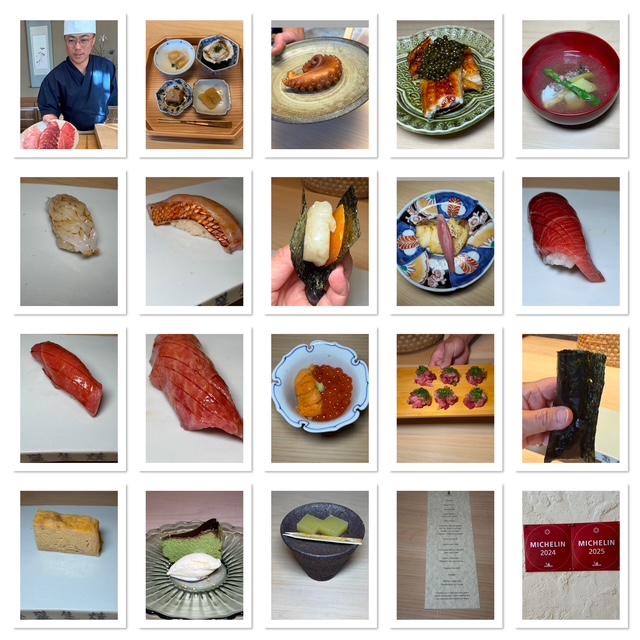
The experience is a 17 course seasonal omakase, with each course composed of one to two bites. The menu changes regularly based on what is available and at its peak. Much of the fish is flown in from Japan several times a week, alongside a few local selections, and everything is handled with remarkable precision. The rice, which is so critical in sushi, is given equal attention, with two different preparations used throughout the meal, each with the proper texture and seasoning.
The meal begins with a welcome glass of champagne, followed by a creative seasonal sampler, ours included oyster and radish. This is followed by sashimi, a delicate soup, and then a progression of nigiri. Highlights included a trio of tuna cuts, followed by sea urchin with salmon roe, and a tuna hand roll. The meal concludes with tamago and dessert, in our case a matcha cheesecake.
The standout course for me was the crunchy barbecued eel topped with a generous amount of osetra caviar, a perfect balance of texture and richness. Throughout the meal, the fish was pristine, sliced with precision and dressed minimally, often with just a touch of nikiri, allowing the natural flavors to shine.
We enjoyed a carafe of a lovely dry sake, which paired beautifully with the progression.
This is a restaurant that takes its craft seriously. Every course feels thoughtful and deliberate. In a city where omakase has become increasingly popular, Shingo distinguishes itself through authenticity, discipline, and a quiet confidence.
Easily one of the best, if not the best, omakase experiences in Miami.
Recommended. Happy dining.
Shanea
04/16/2026